The Return of Race Science
A Black Cambridge professor is targeted by a self-proclaimed “race realist”. The case of Jason Arday—and what it means for science.
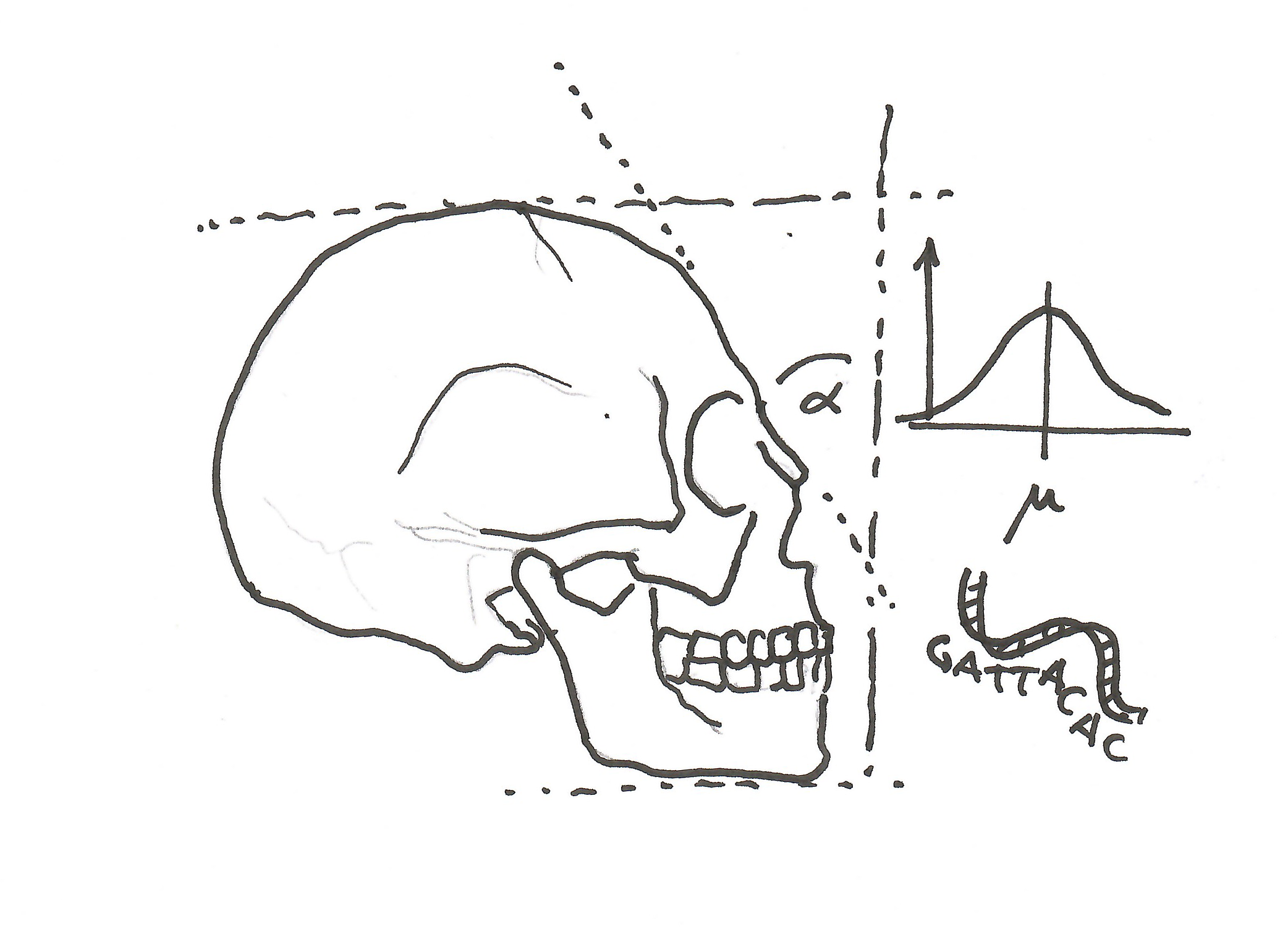
“After the revolution, I'll be the, you know, the head of the Department of Eugenics and Race Science at Harvard!” [1] It sounds like the drunken fantasy of some wannabe thug who has failed at life, muttering to himself in the secrecy of a Nazi basement. Yet these words came from Nathan Cofnas, a young, neatly dressed academic sitting at his desk and giving an online interview. Quite openly, for the whole world to see.
Cofnas is a postdoctoral researcher at Ghent University [2] [3], and he became famous in August 2026. Not because he presented new research, but because he ignited a scandal: Cofnas accused Cambridge professor Jason Arday of lying about his biography and his academic achievements. He claimed that Arday had obtained his professorship only because of the colour of his skin [4]. The allegations led Arday to resign from his professorship [5] [6]. A few days later, Arday was found dead [7] [8]—shortly after Cofnas, smiling slyly, had given an interview in which he joked about his future as a eugenicist and race theorist [1]. Very funny indeed.
The Cofnas–Arday case has been discussed extensively in the media for weeks. But it is worth taking another careful look. Cofnas’s joke about revolution, eugenics and race science helps us understand the broader context: this is not primarily about Jason Arday. It is about an attempt to normalise extremist ideas in academia [9] [10]. There are networks claiming that universities are permeated by the spirit of “wokeness” and must therefore be radically transformed—even to the point of normalising scientifically absurd racial theories.
One or two decades ago, hardly anyone would have thought this possible. The idea that explicitly racist thinking might seek acceptance in university circles would have been dismissed as a foolish conspiracy theory. Yet the boundaries of what can be said have shifted dramatically. The networks promoting such ideas and seeking to establish them at universities operate internationally. Some cooperate with far-right political parties [11] [12]; they extend from billionaires such as Peter Thiel [13] [10] to the Identitarian movement and other organisations on the far right.
The Cofnas–Arday case did not create these networks, but it showed what this movement is capable of. This case may one day be seen as a significant turning point. So let us take a closer look at what happened.
Jason Arday
Jason Arday’s biography really does sound extraordinary: as a child, he was diagnosed with autism and a general developmental delay [14] [15]. According to his own account, he did not learn to speak properly until the age of eleven, or to read and write properly until the age of eighteen [14] [15]. Nevertheless, he eventually made it to the University of Surrey, where he studied physical education and education studies [14].
He then continued his research in education, focusing in particular on disadvantaged groups within the education system. He completed a master’s degree and a doctorate at Liverpool John Moores University (LJMU) [14], worked at several universities, was appointed to a professorship in Glasgow [14], and in 2023 was named Professor of Sociology of Education at the University of Cambridge [14]. He was only 37—relatively young for such a prestigious position. This made Arday the youngest Black professor at the University of Cambridge [14].
Alongside his research in education, Arday continued to pursue his athletic ambitions: he is said to have run 30 marathons in 35 days [16] [17] to raise money for charity. To make the story even more incredible, he reportedly developed a hairline fracture in his fibula towards the end [18] [19] and kept running anyway. He is also said to have played semi-professional football [20] [21].
Nathan Cofnas, “race realist”
The other central figure in this story is Nathan Cofnas, a man with plainly racist views. Cofnas describes himself as a “race realist” [9]. To him, it is obvious that humanity can be divided into distinct races and that some races are more capable than others [9] [22].
He places himself—unsurprisingly—among the supposedly high-performing races [9]. In his “hereditarian” philosophy, Black people are largely unsuited to higher cognitive achievement. If merit alone determined outcomes, Cofnas and other “race realists” believe, there would be hardly any Black students at elite universities, and the number of Black university professors would approach zero [9]. At most, Black people might be capable of exceptional achievement in entertainment and sport [9]. If Black people are nevertheless present at universities in significant numbers, they argue, this can only show that they are being unfairly favoured over white people [9].
This is not just morally contemptible. It is factually wrong, scientifically refuted and logically incoherent. From a biological point of view, the concept of discrete human “races” makes no sense. “Race” is a social construct, not a category that can be defined by the natural sciences [23] [24].
Dogs may have breeds, but humans do not. Our family tree cannot be divided into clean branches; it is more like a tangled web [23]. Human populations have always mixed. Moreover, human genetic diversity is generally very low: there are a great many human beings, but the genetic differences among us are remarkably small [23].
Of course, statistical analyses can still identify correlations between combinations of genes and geographic regions [24]. But that does not mean that biologically distinct “races” exist [23] [24]. With humans, there is no dividing line comparable to the one between German shepherds and dachshunds. And geographic ancestry tells us even less about traits such as intelligence or creativity—traits that definitely cannot be explained by a small number of genes [24].
“Race realists” do not care about any of this. They ignore the scientific consensus that race has no meaningful biological basis in humans [23]. At the same time, they like to present themselves as defenders of a rigorously rational and scientific worldview: genetic differences in intelligence between white and Black people are supposedly an empirical fact, and anyone who disagrees is a politically indoctrinated science denier [9] [22].
But we have long known that things are more complicated. Differences in IQ test scores do exist [22]. Inferring genetic differences in intelligence from them, however, is scientifically wrong [23] [24]. Test scores depend heavily on environmental factors, educational opportunities, and historical, cultural and social conditions [23] [24]. Statistically, these effects cannot be cleanly separated from any alleged “genetic” difference.
Research based on critical race theory, on the other hand, offers much more plausible explanations for observed differences between groups of people [23]. We have built a social system with complicated structures, habits and laws in which ancestry and skin colour often play a role without us even being aware of it. Racism does not manifest itself only when a person in power makes an explicitly racist decision and hires a white man rather than a Black woman. Racism is much more than that. It is an entire complex of ancient prejudices, tacitly accepted habits and unquestioned traditions. It is deeply embedded in our society [23]—which is precisely what makes it so harmful.
“Race realists” have little to say about any of this. They like to portray themselves as fearless empiricists committed to pure rationality, refusing to let political correctness drive them from the path of genuine science—while ignoring a large part of the scientific evidence [23] [24] that matters most to precisely these questions.
Wherever Cofnas goes, controversy follows
Cofnas has repeatedly faced pushback over his views. In late 2019, he published an article entitled “Research on group differences in intelligence: A defense of free inquiry” in the journal Philosophical Psychology [22]. The article triggered fierce academic controversy, and several researchers responded with a detailed critique explaining why Nathan Cofnas’s racial theories are scientifically untenable [22].
In 2022, Cofnas took up a postdoctoral position in the Faculty of Philosophy at the University of Cambridge [25], researching the ethics of biology. The university newspaper Varsity became aware of Cofnas and his racial theories and published an article about them. The Daily Mail picked up the story [21].
In 2024, Cofnas published “A Guide for the Hereditarian Revolution” on Substack [9]. It was not an academic paper but a political and strategic analysis. In it, he discusses how the “hereditarian revolution” he seeks might actually be achieved.
He sees the belief that psychological traits and abilities are equally distributed across races and sexes as dangerous “wokeness” [9]. This wokeness, Cofnas insists, must be defeated.
Cofnas, however, wants nothing to do with ordinary racists or neo-Nazis [9]. He is not a populist demagogue trying to send torch-bearing crowds into the streets. In fact, he has little interest in persuading the general public [9]. He is interested in the elite—to which, of course, he counts himself. The elite must be won over to the ideas of “race realism”: an end to multiculturalism, a return to racial heritage, and barriers between races [9]. Race science is to become normal—at universities, in academic thought and ultimately in politics [9].
Cofnas believes this cannot be achieved by an ordinary “march through the institutions” [9]; tougher strategies are required. Racial claims should not be hidden behind agreeable, politically acceptable language. Instead, “Critical Theories” and the “DEI monster” must be confronted head-on [9].
Researchers at the University of Cambridge are employed by the university while also being affiliated with one of its constituent colleges. Cofnas lost his affiliation with Emmanuel College as a Research Associate [25]—a loss without serious consequences. He retained his university affiliation and his position as a Leverhulme Early Career Fellow at Cambridge until his contract expired [25].
Even so, Cofnas seemed deeply embittered by Cambridge afterwards. He wrote that the university publicly championed “free speech” while in reality turning against him simply because he had expressed politically inconvenient views [9] [25].
In spring 2026, after Cofnas had already left Cambridge, he found a new academic home at Ghent University [3] [26]. It did not take long for controversy to follow: students and researchers at the university became aware of his “race realist” views. An open petition by social-science students called on the university not to employ Cofnas in light of his published claims. More than 2,000 people supported the statement [26].
At the same time, Cofnas’s defenders rallied around him, describing the demand as an “attack on academic freedom”. They claimed not to endorse the views Cofnas had spread, but argued in their public letter that universities ought to be places for free debate [27].
The principle is sound: free debate between different scientific perspectives lies at the heart of academic work. But that is not what this is about. Universities must not become a home for scientifically refuted and socially dangerous nonsense. Racism has no place at universities not just because it is morally wrong, but because it is scientifically discredited, untenable and illogical.
No one would demand that anti-vaxxers or flat-earthers be given university posts in order to create “space for free debate”. Yes, a university must tolerate politically inconvenient facts. But when someone tries to revive racial arguments from history’s poison cabinet—arguments that were intellectually laughable even during the Nazi era and have become still more untenable after decades of genetic research—then those are not ideas a university should indulge. Nevertheless, the public letter supporting Nathan Cofnas bore some remarkably prominent names: Peter Singer of Princeton [27]. Steven Pinker of Harvard. Alan Sokal of New York University [27].
Ghent University investigated the matter. According to the British newspaper The Guardian, the Department of Philosophy and Moral Sciences produced a 19-page statement saying it was “unlikely” that Cofnas had been the best candidate for the position [26].
The attack on Arday
By then, Cofnas was already known for stirring up major public controversy with his racial theories. On 21 July 2026, he published an article [4] that would attract far more attention than anything he had written before.
In it, he attacked Jason Arday—a professor at the very university where Cofnas himself had worked only shortly before. He claimed that Arday was academically incompetent, had used indefensible claims to make himself look more accomplished than he really was, and had obtained his professorship only because of “DEI” (diversity, equity and inclusion) [4]—in other words, because non-white people were being given preferential treatment.
Cofnas portrayed elements of Arday’s life story as highly implausible, including his sporting achievements [4]. He also analysed Arday’s dissertation with plagiarism-detection software and found striking overlaps, especially with an earlier dissertation by Paula Zwozdiak-Myers [4] [28]. He examined Arday’s most important academic publications as well and accused him of scientific errors [4] [28]. These were serious issues, and they clearly needed to be investigated. Some of Arday’s statements were indeed false or misleading. That is unacceptable anywhere, and drawing attention to it is entirely justified.
Cofnas presented the matter as a failure of the entire University of Cambridge. He alleged that the university had long known that Arday was a fraud—a “plagiarist and fabulist” [4]—but had been afraid to say so because of his skin colour [4]. This fits the standard right-wing narrative exactly: “Black people are favoured because of a culture of wokeness and political correctness, even when they are not genuinely qualified. They therefore take prestigious jobs away from white people who would perform much better.”
Only Nathan Cofnas knows whether this attack on Arday was some kind of revenge against Cambridge for failing to give him a permanent position. In an online interview, however, he remarked: “Maybe the lesson is: this is what happens if you don’t give Cofnas a job! [1]” What now seems clear is that this was not the act of a young whistleblower seeking to expose academic misconduct. It was the calculated action of an activist who had been pursuing an explicit political agenda for years.
A media storm erupts
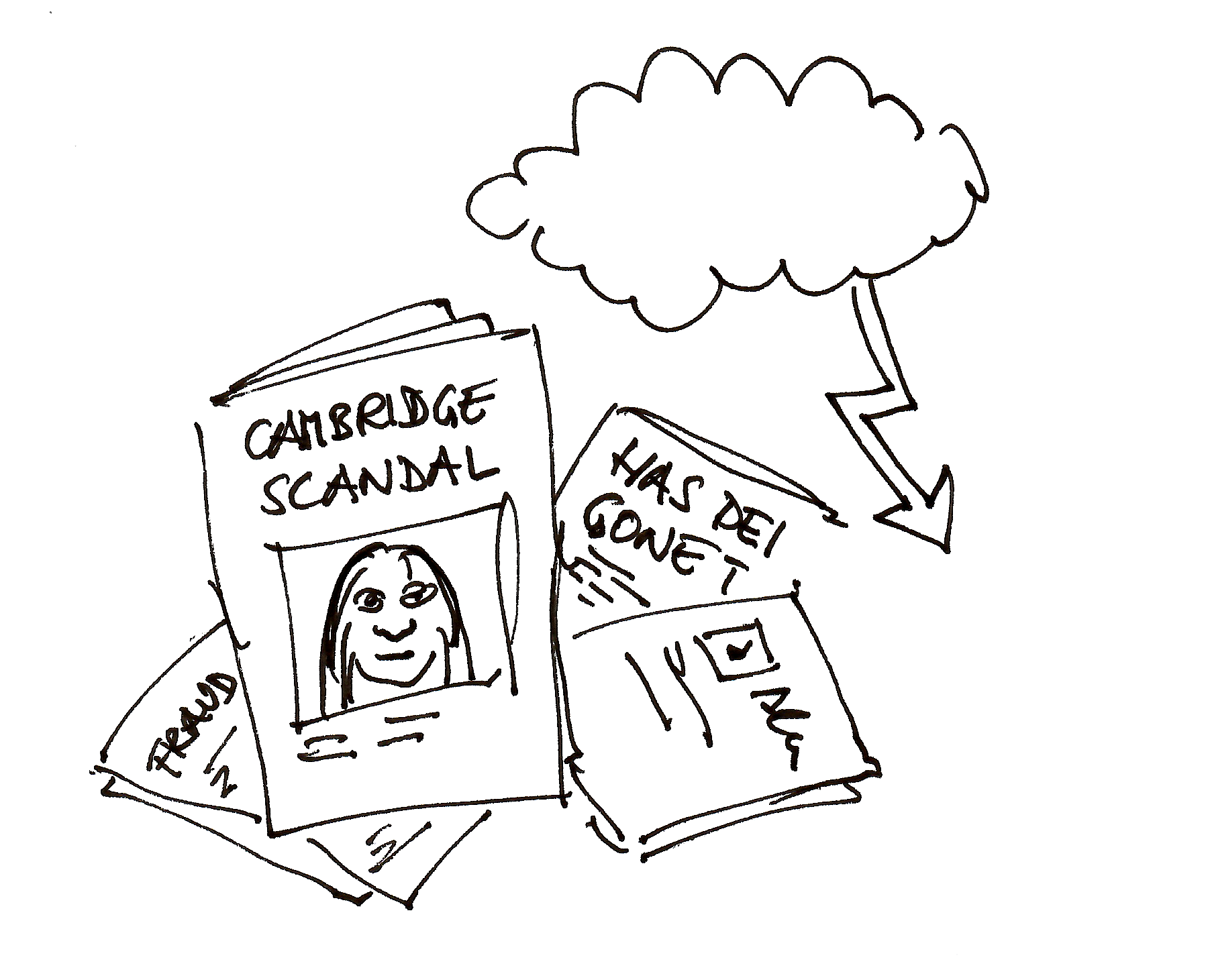
The story exploded. Within days, more than 200 articles about the Arday affair had appeared [21]. The University of Cambridge initially stood by its professor [29]: it criticised the ferocity of the attacks and pointed out that the dissertation had not been submitted at Cambridge at all, but at LJMU in Liverpool. Liverpool had already considered the allegations, examined Arday’s dissertation and decided that the case did not amount to plagiarism. Arday therefore retained his doctorate [29] [30].
But by then, the story was no longer just about plagiarism. It was about politics [31]. It was about whether universities favour Black people, and whether a fraud had been helped into a professorship merely so Cambridge could claim not to be racist. It is difficult for an outsider to imagine what Arday must have experienced in the midst of this raging media storm.
As the coverage intensified, further inconsistencies emerged: Arday listed a master’s programme on his CV that he apparently had not completed [21]; a book that apparently was never actually published [21]; and positions as a “Visiting Professor” for which there seemed to be no evidence [21] [32].
On 5 August, in light of new information, Cambridge announced its own investigation into Arday’s academic qualifications and honorary appointments [6], in addition to its examination of the allegations of academic misconduct. Shortly afterwards, without waiting for the investigation’s findings, Arday resigned from his professorship [5]. The accusations and the media frenzy, he wrote, had reached the limits of what one individual could bear [5].
At that point, one might have thought the matter was over: genuine falsehoods had been identified, a scandal had erupted, investigations had begun, and the person targeted had left his post. But the attacks did not stop; the number of media reports actually continued to rise [21]. A few days later, on 14 August 2026 [7] [8], Arday was found dead in a flat in London.
You might expect Arday’s opponents, who had pursued him so relentlessly, to finally fall silent at this point. Even if they remained entirely convinced that every accusation had been justified, they might pause and honestly admit that things had gone too far, that the campaign had been too brutal, that a person should not be hounded to his death. Yet there was little sign of this. Articles continued to appear depicting Arday as a pathological liar, an academic fraud and a “DEI hire” [31].
Before long, however, other voices began to examine Nathan Cofnas’s views more closely and criticise him sharply. His employer, Ghent University, expressed concern. A preliminary disciplinary investigation was opened on 20 August [3] [2], and Cofnas was eventually suspended. This means that he was not dismissed; he continued to receive his salary [2].
Once again, a statement supporting Cofnas circulated. People must be allowed to draw attention to academic misconduct such as plagiarism and data fabrication, the letter argued. Cofnas must not be punished for doing so [27] [33].
This is bizarre. No one had disputed that academic misconduct can be criticised in public. That was not the issue. Ghent University suspended Cofnas for entirely different reasons. It was investigating, for example, whether he had used his academic position in Ghent to spread hereditarian claims even though he had been employed to work on a research project about liberalism [26] [2]. Moreover, promoting ideas of racial superiority or inciting racial segregation violates the university’s code of ethics. Even when Cofnas made such statements in a private capacity, the university said, they could violate university rules and even Belgian anti-discrimination law [2].
Cofnas was therefore not suspended for criticising academic misconduct. He was suspended because he was suspected of promoting race science both professionally and privately [2] [3]. The distinction is straightforward—yet more than nine hundred people [27] [33] apparently found this simple fact too much to grasp and signed the statement. The signatories included people counted among the world’s intellectual elite—or at least people who once were: Richard Dawkins, Steven Pinker, David Deutsch [33] and others.
Cofnas has still not been dismissed. According to media reports, he agreed to work from home for the time being and not teach [34] [3].
So what is actually true?
What are we left with, then? The picture that emerged after the media storm was more complex than most people had initially assumed. Had Arday simply invented his achievements, his CV and his heroic life story? No. That is not a fair conclusion.
Some serious allegations against Arday seem to have been justified. Yes, there were errors [35] [28]. Calling for serious consequences is entirely legitimate. But neither science nor the search for truth is served by inflating mistakes that are unfortunately quite common in academia into unique scandals, or by portraying Arday as a pathological liar who fraudulently obtained everything he ever achieved. That is a malicious distortion of the facts.
Many commentators mocked Arday’s claims without conducting any research at all. A professor who played semi-professional football [20]? Ha, that must be false! Thirty marathons in 35 days [16]? Ha, an obvious lie! Running on a broken leg? Does he take us for fools?
Over time, however, it became clear that Jason Arday really had been an exceptional athlete. The claim that he played football turned out to be true [20]. His marathon runs can no longer be reconstructed without gaps, but archived data from the fundraising platform JustGiving still documents most of them [16] [19]. There had also been contemporaneous reporting on the fundraising challenge [18]. The hairline fracture in his fibula that did not stop him from running was reported at the time. That is not, of course, a medical diagnosis, but it does make one thing clear: Arday did not simply invent the story after the event [17] [18].
For some of the more exaggerated-sounding details, it is also unclear whether they originated with Arday or whether journalists embellished what he said. The hairline fracture in his fibula, for example, became a “broken leg” in media reports [18]. There is no evidence that Arday himself described it in those terms.
The allegations about his CV are more revealing. Had Arday embellished it with lies in order to obtain a Cambridge professorship? Here too, the reality is more complicated. He claimed to have completed a master’s degree in “Psychodynamic Practices” at Birkbeck [21]. That appears to be false; Birkbeck could not confirm it. Arday also listed a whole series of visiting or adjunct professorships at other universities. Some were accurate—for example, one at London Metropolitan University [32]—while others were unclear or unsupported [21].
Even the question of whether someone counts as a visiting professor is not always easy to answer. What does the title actually mean? Academic work usually affords considerable freedom. There is no office where one clocks in and out. International collaborations, research visits and guest lectures are part of everyday life. If a professor spends some time at another university, writes a paper there and gives a few lectures, does that make them a visiting professor? It depends on how we define the term. Such visits are often informal and unpaid, involving no paperwork and no entry on the university website. If a university later says that someone was not employed there, that does not necessarily mean that no collaboration or visiting role ever existed [36].
The odd thing is that such entries on a CV are largely irrelevant to a Cambridge professorship [36]. No one is going to say: “Let’s appoint this other fellow instead—he has one more visiting professorship and an extra master’s degree from Birkbeck.” These are details.
That does not excuse false information on a CV. No: details must be accurate too, and there is no point glossing over that. But the disputed claims are not the kind of CV entries on which a professorial appointment depends [36] [37]. It is difficult to know how the errors arose. If Arday knowingly lied about them, it was extraordinarily foolish: a lie that placed him at risk without providing him any real advantage.
The same applies to the unpublished book [21]. Anyone who has worked with a publisher knows how this happens. You begin a book project. Things change. Publishers adapt their programmes. Projects are postponed. At some point, you may list a work in progress on your CV [21]. Should one be more careful about such things than Arday was? Yes, without question. Does it amount to fraudulently obtaining a professorship? Not really.
In his dissertation, Arday did indeed reproduce numerous passages from another dissertation [4] [28]. That too is beyond dispute. This should not happen, and his doctoral supervisor in particular should have noticed it. What is frustrating, however, is that this case—like many plagiarism debates—is treated as though the essence of good scholarship were simply never to reproduce a phrase, but instead either to rewrite every sentence completely or to place it in quotation marks. No. That is only marginally relevant. The decisive questions are: did someone perform independent work? Did they generate new ideas? Did they create something useful for further research? Plagiarism software cannot answer those questions; only experts in the field can. That includes the people in Liverpool who investigated the plagiarism allegations and found no case warranting disciplinary action [29] [30].
The criticisms of Arday’s academic publications are probably more serious than those concerning his dissertation. And yes, there were inconsistencies. According to Retraction Watch, papers had to be amended after publication [35] [28]; some figures were plainly wrong [28] [30]; and quotations were found that had elsewhere already been attributed to different people [28] [38].
This really is a serious problem. But are such lapses in science unheard of, unique or unprecedented? Unfortunately not. The pressure to publish is immense. Young researchers in particular sometimes face a choice: do I cut corners, or risk the end of my career? Many papers have to be corrected or retracted. Some errors result from carelessness; others from deliberate misconduct [28] [30]. What lay behind each inconsistency in Arday’s case has not been established. The problems must not be minimised—but suspicion must not be seen as proof of data fabrication either [30].
None of this excuses Arday’s misconduct. Even if such behaviour is, like a rough foul in football, a genuine part of professional life, it must be examined carefully and there should be consequences where appropriate. And that is exactly what happened: the University of Cambridge initially defended Arday against racist attacks, then took the matter seriously and opened an investigation [6]. That is the correct and responsible thing to do. Arday resigned from his position [5]. At this point, one has to ask the critics who indignantly cry “scandal” and claim to stand for spotlessly clean science: what more do you want? Should the matter not have been over by then?
Was this racism? Spoiler: yes
This brings us to the question at the heart of the entire debate: did racist reflexes play a role in this smear campaign? Reporting on Arday repeatedly made his skin colour central to the story [31] [21]. The story was not “inconsistencies discovered in the record of a Cambridge professor”, but “Cambridge’s youngest Black professor should never have been a professor in the first place”. That was precisely the perspective from which the “race realist” Nathan Cofnas had launched the story [4].
So let’s compare this with a number of similar cases and see whether skin colour was a factor here.
Mart Bax, a professor of political anthropology in Amsterdam, wrote about, among other things, an alleged “little war” between rival clans in the Bosnian town of Medjugorje [39], in which more than one hundred people were supposedly killed. The trouble was that nobody apart from Bax seemed to know anything about it. An investigative committee later found serious academic misconduct [39]. Numerous publications he claimed to have written could not be found, and statements about awards and academic positions were also false [39]. There was no media attention comparable to the Cofnas–Arday affair.
Marc Tessier-Lavigne, a prominent neuroscientist and president of the elite Stanford University [40], had published papers in which irregularities or manipulation of images and data were discovered. A committee investigated and confirmed the errors [40]. Tessier-Lavigne resigned as president but remained a professor [40].
Diederik Stapel was a professor of social psychology in Groningen and Tilburg. He was found to have fabricated large amounts of data [41]—a far more serious offence than anything Arday was ever accused of. He lost his position, and numerous publications were retracted [41].
James Hunton of a university in Massachusetts worked, ironically enough, in the field of “corporate ethics”. Suspicions arose when he could not provide raw data for one of his publications [42]. Investigations revealed a pattern of data fabrication [42]; Hunton resigned and papers were retracted. Again, this was a far more extreme case than Arday’s, but there was no media storm.
David Latchman, Dirk Smeesters, Lawrence Sanna, Marc Hauser—these are all names listed by Stanford University under “Instances of Scientific Misconduct” [43]. But are these cases widely known? Has anyone read about them in international newspapers? Was any of them subjected to a media witch-hunt? No. That happened only to Jason Arday, even though other cases were far worse.
The double standard is hard to miss. Nathan Cofnas has been known for years for his central research claim [9] that Black people are less intellectually capable. When someone like that surveys all the cases of academic misconduct in the world and singles out one of the very few Black professors at an elite university [4] [14], his aim is not to keep science free of unethical conduct. The suspicion is obvious: he wants to keep science free of non-white people.
It is also worth asking how Nathan Cofnas obtained his position at Ghent University. The philosopher Bouke de Vries [26] hired him for a project on liberalism and demography [26]. This caused some surprise. Cofnas had not previously worked on liberalism, and his research on ethics, biology and IQ did not seem an obvious fit. In fact, his CV contained only one connection to the subject [26]: a lecture he had given on it for Bouke de Vries in Ghent. It is almost as though he had been hired as a postdoc not for his expertise, but solely for his political views. Could the fearless champion of pure meritocracy have got his own university job through a process that was not entirely meritocratic? We do not know.
How good was Jason Arday, really?
You could still argue that none of this matters. Perhaps other cases were worse and the consequences there were less severe. That does not alter the fact that documented inconsistencies and errors existed in Jason Arday’s case, and those are unacceptable under any circumstances. Therefore, Jason Arday was not a good scholar and should never have become a Cambridge professor.
I would never attempt to judge the academic quality of a social researcher; it is not my field. But we can do exactly what right-wing anti-woke activists claim to care about so much: look at the objective numbers.
The clearest measure of Jason Arday’s actual success is how much he published and, above all, how often other researchers cited his work. Citation statistics [44] [36] are generally treated as an important indicator in academia: when a paper is cited frequently, it is recognised by the scholarly community, regarded as valuable and considered influential in its field. The metric is not perfect, but it is the best one we have. Many academic papers are published without having any effect on the world at all; many are never cited even once. How did Arday compare?
Several people dug into the publication and citation data to answer precisely this question. They included the University of Toronto scholar of fascism Jason Stanley [36] and the neurobiologist Giorgio Gilestro of Imperial College London [44]. Both reached the same conclusion: judged by the numbers, Jason Arday had been remarkably successful.
Gilestro found that by 2026 Arday had published 39 academic papers, books and book chapters [44]. Together they had been cited 983 times [44]—more than the work of 89 per cent of researchers at his career stage [44]. In Arday’s case, one thing seemed clear: this was a young man of unusual potential.
Appointing a professor is always a strategic decision. A university can appoint someone who has long been a famous research figure—ideally just before they win the Nobel Prize. After decades in academia, such people naturally have a publication record very different from that of a 37-year-old. Or a university can back young, ambitious researchers in the hope that they will reach the very top of their field. In Arday’s case, Cambridge chose the latter option. Arday’s appointment therefore seems neither unusual nor strange, particularly given that this was not even his first professorship. By then, Arday was already a professor in Glasgow [14].
“Mainstreaming racism”
What does all of this tell us? Tragically, the entire episode proves that Jason Arday was right. One of his central arguments was that universities are not as meritocratic [14] [36] as we like to believe. We prefer to tell ourselves that skin colour no longer matters, but that is not true. Ideas about who is “normal” and who is “different” remain deeply embedded in our thinking, making life considerably harder for people who do not fit the familiar image.
Arday also worked on neurodivergence and mental distress, connecting these subjects with race [14] [38]. Different forms of disadvantage do not exist in isolation; they intersect.
Those disadvantages were made horribly visible by the campaign against him and by his death. Arday was not treated in the same way as other people in comparable situations who had made similar mistakes. He became the victim of a racist mob [31] [45]. In the end, it hardly matters which accusations against him were justified and which were not. No human being deserves to be subjected to a mob. Anyone with even a remotely functioning moral compass does not take part in such campaigns.
But the episode also shows, just as tragically, that Nathan Cofnas was right about one thing: his strategy. He wanted to reach the “elites” [9], give his racial theories greater visibility and present them as part of the “normal” academic spectrum [9] [10]. That is precisely what he achieved. Not because he is such an outstanding researcher, public intellectual or speaker, but because the world has become radicalised. Because society—including the academic elite—has become receptive to statements that ten or twenty years ago would have been dismissed as far-right extremism.
That is the wider political significance of the Cofnas–Arday affair: moral principles we considered untouchable are being softened up for assault. Countless small attacks blast holes in the foundations of democratic and liberal decency. Eventually those walls are so riddled with holes that they can no longer support anything. That is the aim of radical groups. And a shocking number of academics—people who would never regard themselves as far right, but instead see themselves as conservative or even left-wing intellectuals—are playing along.
This is not, of course, a tightly organised movement with a headquarters and a master plan. The academic New Right is extremely heterogeneous [10]. It ranges from hard-core far-right extremists, people with racist views and sympathy for eugenics, to conservatives who like to complain about “wokeness” and shout “Cancel culture!” whenever nobody laughs at an old joke from the 1980s.
The movement is far more subtle: it is a sprawling network of discreet funders [10] [46], media platforms that provide greater visibility, and right-wing nationalist parties delighted to receive apparently academic support.
The Pioneer Fund, the Human Diversity Foundation and Aporia
One of this movement’s roots is the Pioneer Fund, established in 1937 [47] [48]. Ideologically, it was closely associated with the eugenics movement of the time and explicitly modelled itself on Nazi racial policy in Germany. One source of inspiration was the SS-run Nazi Lebensborn programme [47], which sought to promote “racial hygiene” and increase the birth rate of “Aryan children”. Among the Pioneer Fund’s first activities was the distribution in the United States of the Nazi propaganda film Erbkrank [47]. The Pioneer Fund’s first president was Harry Laughlin [47], who had previously headed the Eugenics Record Office and advocated the forced sterilisation of “unworthy” members of society.
For their 1994 book The Bell Curve, which drew international attention with claims about differences in intelligence between human races, the authors Charles Murray and Richard Herrnstein [47] [48] relied extensively on “research” funded by the Pioneer Fund.
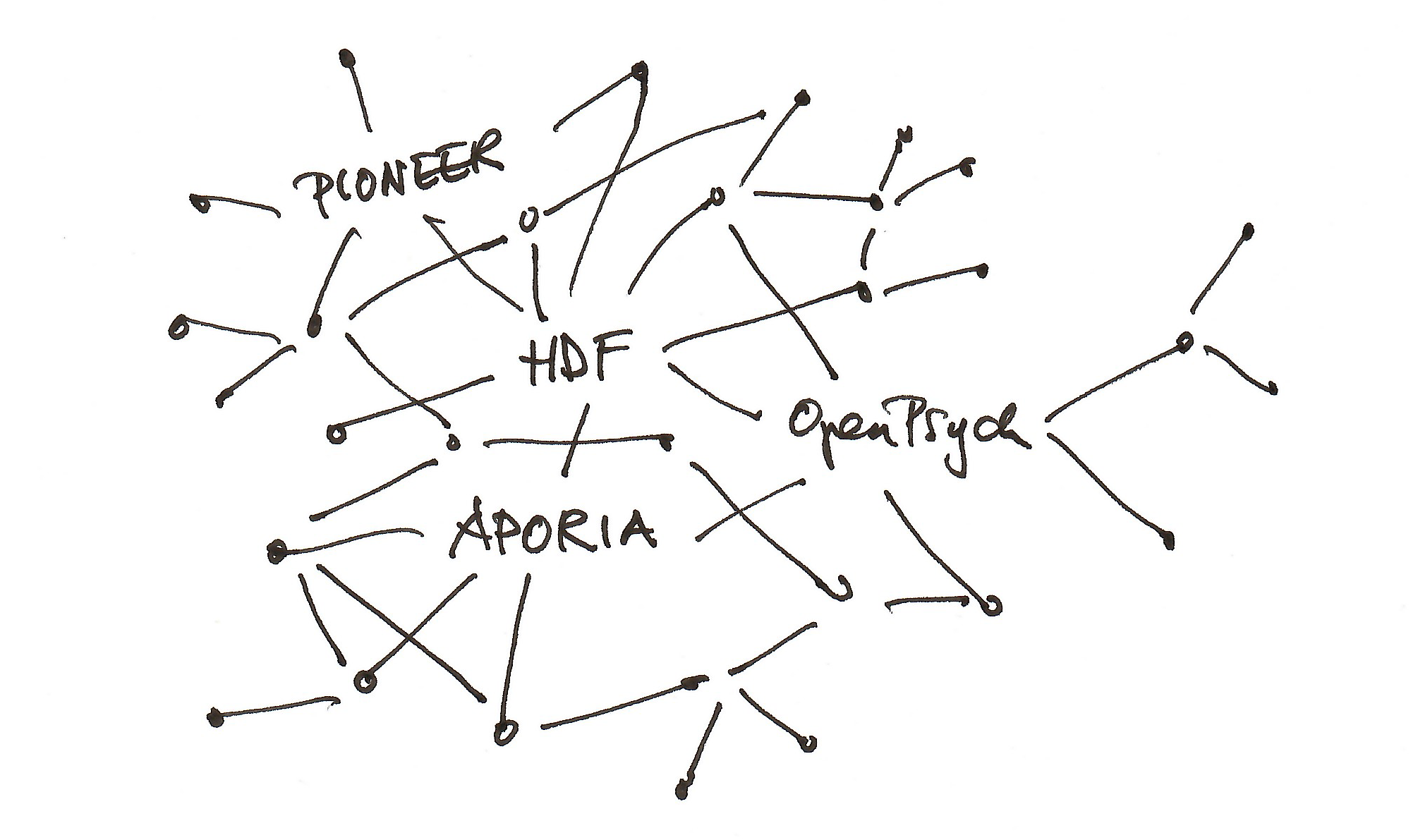
Later, the focus shifted from the Pioneer Fund to the Human Diversity Foundation (HDF), whose operating company is now called Polygenic Scores LLC [10] [49]. A 2024 undercover investigation by The Guardian and the organisation Hope Not Hate showed that, in terms of personnel and organisation, the HDF effectively succeeded the Pioneer Fund [10] [48] and continued its pursuit of race research. Hope Not Hate names Emil Kirkegaard as its founder and CEO [10]. Kirkegaard conducts research on race and intelligence and heads the HDF’s “research arm”. Although he denies that the HDF is a far-right organisation, he confirms that it supports race research [50], and in 2022 he spoke at a conference organised by the right-wing lobbying group Traditional Britain Group [10].
What do you do when your obscure race research cannot get published in genuine academic journals? No problem: you simply publish it in your own pseudoscientific journals. According to Hope Not Hate, the HDF has very close links to Mankind Quarterly and OpenPsych [10] [51]. Neither is recognised by the scientific community, but both imitate the style and appearance of academic scholarship [10]. This allows obscure claims to be presented in a way that looks scientifically respectable—at least at a superficial glance.
The network also has a non-academic arm aimed at taking the ideology of the Pioneer Fund and HDF to a wider audience. The online magazine Aporia publishes articles [10] [52] on intelligence research, immigration and genetic differences between groups of people. According to Hope Not Hate, it specifically seeks to reach readers with influence in academia, the media and politics [10] [46]. The aim is not to address radical groups in dingy basements, but to remove race research from the disreputable fringes and give the HDF’s claims social and academic legitimacy [10] [50].
This appears to be working rather well. Aporia has repeatedly managed to attract prominent figures from academia; Steven Pinker, for example, appeared on an Aporia podcast [53]. Pinker himself said that he had intended to challenge the ideas presented there [53], but The Guardian described his appearance as a “milestone” in efforts to rehabilitate formerly discredited models of a biologically determined racial hierarchy [53].
The network also has political connections. As part of Hope Not Hate’s undercover investigation, journalists met the far-right influencer Erik Ahrens [12] [11]. Ahrens had worked on social-media campaigns for Germany’s AfD party [11], maintains close contact with Aporia editor Matthew Frost and is building an international network of right-wing groups. There were also contacts with the Identitarian movement in Austria and the Freedom Party of Austria, the FPÖ [11]. The same investigation revealed that the HDF had received $1.3 million from the US entrepreneur Andrew Conru [10] [46].
One of Aporia’s editors is Noah Carl [52], who in 2018 received a three-year research fellowship at St Edmund’s College, Cambridge [54]. His work on intelligence, immigration, crime and ethnic groups met with fierce opposition. Hundreds of professors and other academics signed a letter to St Edmund’s describing Carl’s work as an “academically discredited line of inquiry”. The research, they wrote, was “ethically suspect and methodologically flawed” [54]. The fellowship was eventually terminated [54]. But new doors opened: on the undercover recordings, Emil Kirkegaard himself said that he had put Carl in contact with Peter Thiel [10].
Noah Carl also attended the London Conference on Intelligence [55] [56]. This series of conferences is regarded as an important networking event for the scene and was held several times from 2014 onwards at University College London to discuss race, IQ and eugenics. Formally, the events had no connection with the university; the rooms had been booked for an “external event” [55], as UCL emphasised. But holding such events there deliberately places racial theories in the vicinity of academia. It normalises the subjects, strengthens networks and blurs the line between far-right agitation and science until a casual observer can barely recognise it.
This is the world Nathan Cofnas belongs to. He also published in Aporia [57] [9]. In his essay “A Guide for the Hereditarian Revolution”, he summed up what could be called the movement’s core ideology: the fight against “wokeness” could only be won if society’s elites accepted hereditarian ideas about differences between “races” and sexes [9]. Win over the intellectual elite first, he argued, and universities, politics and other institutions would follow [9].
James Orr’s Cambridge circle
Cambridge also has another politically conservative circle in which the theologian and philosopher James Orr plays an important role. Orr is a skilled networker within the scene and has jokingly described his home in Cambridge as the “Right Wing Mecca” [58]. Aporia, for example, explicitly thanked Orr for inviting the magazine to the 2023 National Conservatism conference in London [57]. Orr also maintains close ties with the tech billionaire Peter Thiel, who channelled a five-figure donation to the University of Cambridge through Orr [13].
But Thiel’s links to hereditarian circles go much further. Emil Kirkegaard told the Hope Not Hate undercover reporter that Thiel had flown him in for a personal meeting in 2019 [10] [46] and afterwards asked him to recommend other interesting people. Kirkegaard said that he suggested Noah Carl and Nathan Cofnas, among others [10]. There is, however, no evidence that Cofnas or the HDF received money directly from Peter Thiel [10].
Peter Thiel also supports the political blogger Curtis Yarvin [13], who is regarded as an important thinker within the scene. Yarvin explicitly rejects democratic ideals of equality [59]. Different races, he argues, differ in intelligence, and intelligence should affect a person’s political rights. He has suggested, for example, that in South Africa only people with an IQ above 120 should be allowed to vote [59].
What now?
What should we do about this ugly situation? We must resist with all our strength the takeover of universities by far-right pseudoscience. But that alone will not be enough. We need to take a step back and ask whether the academic community has a larger cultural problem.
Science still comes with a certain cult of the star researcher: the successful scientist is the one who works through the night and sacrifices everything for a career. Years ago, I was told this about a researcher who was already famous at the time and has since won the Nobel Prize in Physics: “He doesn’t walk to the toilet, he runs. Otherwise he would waste valuable seconds that could be spent on physics.” I have no idea whether that is true. But it does not really matter: the story captures the stereotypical image of the great researcher that shapes academic culture. We still celebrate the myth of the tough man—and yes, in people’s minds it is primarily a man—who needs no help, has no weaknesses and never gets tired.
In that picture, there is no place for people with disabilities, impairments or particular needs. What about people who do not want to exhaust themselves under self-destructive working conditions? Not good enough for science! What about people who want to collect their child from nursery at five o’clock? Well, are they sure they take their academic career seriously enough? What about people from difficult social backgrounds who were not carried through school by an academic family? What about people from disadvantaged social groups who feel like outsiders from their first day at university because everybody else looks different from them?
What about people on the autism spectrum, such as Jason Arday? If the goal is to maximise scientific output, should they be pushed out of the system? Or should they be supported so they can fulfil their potential?
Whether Arday really learned to read and write only at the age of eighteen is not the key point here. It is known that he was diagnosed with developmental delay as a child [14] and that he faced particular challenges. Nevertheless, he rose to a professorship at Cambridge. Whatever one thinks of Arday, he made widely noted contributions to research [44] [36] that, only a few years earlier, hardly anyone would have expected him to make.
It also shows how important support can be. Shouldn’t a good school or academic environment take it for granted that different people have different strengths and weaknesses? Shouldn’t it be completely normal by now to work in teams built on trust, to compensate for individual shortcomings and catch errors early? In a research group where everyone pulls together, watches out for one another and offers help, plagiarism should never become an issue in the first place. Anyone who takes academic standards seriously should not only punish errors, but also create structures that prevent them from happening.
This is where the old academic cult of genius meets the new race science. An ideal of the scientific genius is constructed, and it is decided in advance who gets to embody that ideal and who does not. They call this “meritocracy”. Merit must prevail, say the same people who want to decide what is allowed to count as merit. The result is a brutally competitive scientific machine in which exactly the kind of person who has always won continues to win—and everyone else is declared unworthy, regardless of what they might actually have to offer science.
Science is an intellectual adventure. Science means testing the full diversity of ideas that human beings are capable of producing and discovering which of them help us understand the world. If we build this system on competition, harshness and segregation, we will never make full use of the diversity of human creativity.
Anyone who assumes in advance that large parts of humanity are overwhelmingly incapable of ever contributing anything constructive to science is not just spreading a vile racist worldview—they are also holding science back.
My thanks to all my readers and to everyone who shares and recommends my work! If you would also like to support my work, you can buy me a coffee here.
Sources
- Rob Montz: The Man Who Took Down Cambridge’s Star Professor, Interview (14.8.2026) — Primary source: the recorded interview containing the Harvard joke and the remark about the job.
- The Guardian: Cofnas suspended by university (20.8.2026)
- Ghent University: Updates on case of a postdoctoral researcher
- Nathan Cofnas: DEI Fraud and Cover-Up at Cambridge (21.7.2026)
- The Guardian: Jason Arday resigns amid accusations (5.8.2026)
- University of Cambridge: Statement about Professor Arday (5.8.2026)
- University of Cambridge: Vice-Chancellor statement (14.8.2026)
- The Guardian: Coroner opens inquest into Jason Arday’s death (26.8.2026)
- Nathan Cofnas: A Guide for the Hereditarian Revolution (2024)
- Hope Not Hate: Race Science Inc. (2024)
- Der Standard: Erik Ahrens’ Plan einer rassistischen Internationale —
- Hope Not Hate: The HDF influencer scheme
- Byline Times: Peter Thiel and Cambridge University pipeline (9.7.2026)
- University of Cambridge: Jason Arday joins Faculty of Education (2023)
- The Guardian: Jason Arday’s childhood account scrutinised (12.8.2026)
- JustGiving: Jason Jogs 30 Marathons in 35 Days (2010)
- JustGiving: Jason Arday – The 300 (2011)
- Analysis of the original reports about Arday’s marathons and hairline fracture
- Chronological examination of the marathon evidence and contemporaneous reports
- Lewisham Borough FC: Jason Arday, player profile
- The Guardian: The rise and fall of Jason Arday (6.8.2026)
- Cofnas: Research on group differences in intelligence, Philosophical Psychology
- American Association of Biological Anthropologists: Statement on Race & Racism
- US National Academies: Using Population Descriptors in Genetics and Genomics Research
- University of Cambridge: Disciplinary investigation, Dr Cofnas
- The Guardian: Ghent professors challenged expertise of Cofnas (27.8.2026)
- Inside Higher Ed: Academics back Nathan Cofnas in open letter (25.8.2026)
- Retraction Watch: Investigation of Arday’s publications (27.7.2026)
- University of Cambridge: Statement to media (2.8.2026)
- Byline Times: The story behind the story of the impossible data (10.9.2026)
- The Guardian: Black academics respond to Jason Arday affair (8.8.2026)
- London Metropolitan University: Decolonising London Met (2020)
- For Better Science: Open letter on Cofnas and its signatories
- The Guardian: Cofnas permitted research but barred from teaching (30.8.2026)
- MDPI: Correction to Arday (2018) (2023)
- Jason Stanley: It sure looks like Jason Arday was… (2026)
- University of Cambridge: Vice-Chancellor statement (12.8.2026)
- Arday (2018): Understanding Mental Health, Social Sciences
- Vrije Universiteit Amsterdam: Baud Committee report on Mart Bax (2013)
- Stanford Board of Trustees: Report on the Tessier-Lavigne case (2023)
- Tilburg University: Levelt Committee on the Stapel case
- Bentley University: Statement on Professor James Hunton
- Stanford: Instances of Scientific Misconduct, Tessier-Lavigne
- Giorgio Gilestro: Four lies about Jason Arday (2026)
- University of Cambridge: Statement (21.8.2026)
- The Guardian: International race-science network funded by US tech boss (2024)
- Paul Lombardo: The American Breed, Nazi Eugenics and the Pioneer Fund
- Hope Not Hate: History of the Pioneer Fund
- Emil Kirkegaard: Closing of HDF, his own statement (2026)
- Emil Kirkegaard: Taboo Science Inc., his own statement (2024)
- OpenPsych: About
- Aporia: Special announcement on Noah Carl
- The Guardian: Steven Pinker and the Aporia podcast (7.6.2025)
- Varsity: St Edmund’s ends Noah Carl fellowship (2019)
- UCL: Statement on London Conference on Intelligence (2018)
- Varsity: Noah Carl and the intelligence conference
- Aporia: Special report on the NatCons (2023)
- UnHerd: James Orr and the Conservative Kibbutz (2025)
- Curtis Yarvin: South Africa, the solution (2009)